Grating vs. Shredding Cheese: The Right Tool for Every Job
Fluffy Parmesan, melty cheddar shreds, and paper-thin shavings each need a different tool. Here is how to match the cut to the cheese and the dish.
 By Priya Hollis
July 28, 2026 · 5 min read
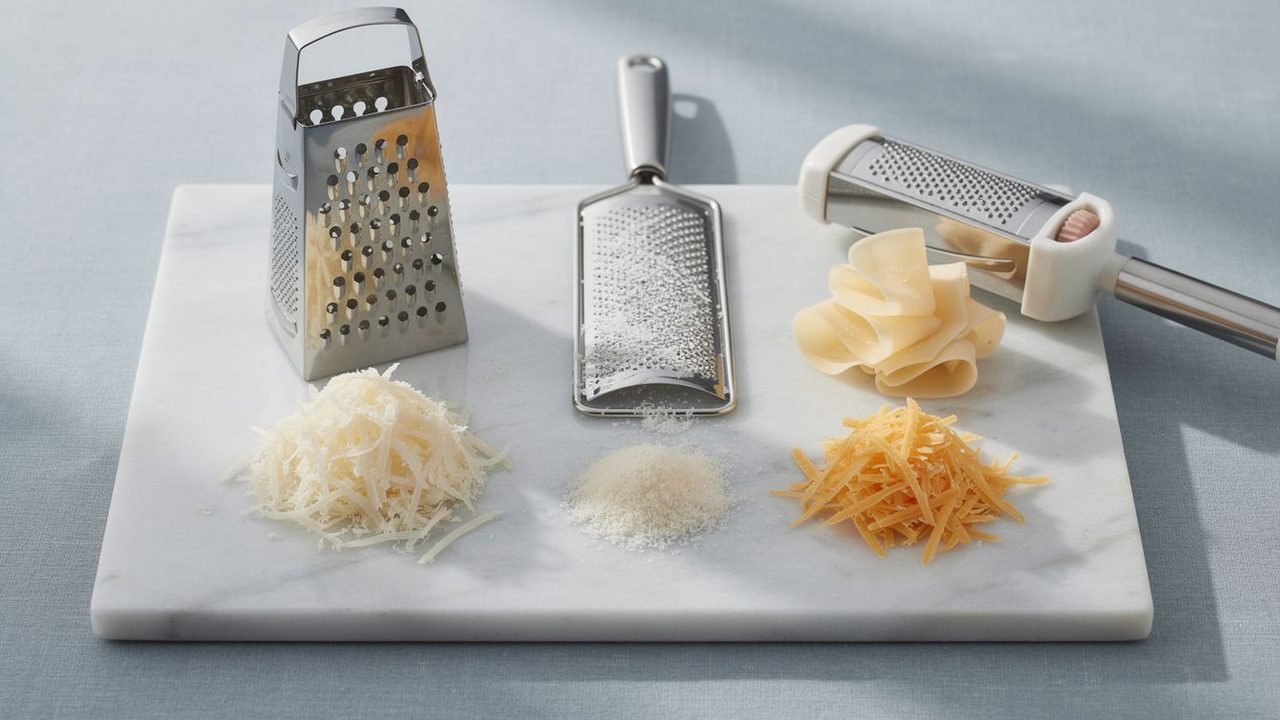
Grating and shredding sound like the same thing, and in casual conversation they often are. In the kitchen, though, the size and shape of your cheese makes a real difference. It changes how fast the cheese melts, how evenly it spreads, how strong it tastes, and even how much you need. Here is a practical guide to the tools and cuts, and when to use each one.
The difference in plain terms
- Shredding produces strands or ribbons of cheese, typically on the large holes of a box grater. Shreds are best for melting.
- Grating produces fine, fluffy, or powdery particles, typically on a rasp-style grater or the small holes of a box grater. Grated cheese is best for seasoning, finishing, and blending smoothly into sauces.
- Shaving produces thin, wide slices, usually with a vegetable peeler or cheese plane. Shavings are best for salads, carpaccio, and garnishes where you want texture and visual appeal.
The tools
Box grater
The workhorse. Most box graters have four sides:
- Large holes: for shredding semi-firm cheeses like cheddar, Monterey Jack, mozzarella, and Gruyere.
- Medium or small holes: for finer shreds that melt quickly, good for quesadillas and topping soups.
- Tiny punched holes: for grating hard cheeses, though these can clog easily.
- Slicing blade: for thin slices of firm cheese.
Look for a sturdy grater with a comfortable handle and a non-slip base.
Rasp-style fine grater
A long, narrow grater with tiny, razor-sharp teeth. It produces feathery, cloud-like piles of hard cheese that melt instantly on hot pasta. It is also the best tool for citrus zest, fresh nutmeg, garlic, and ginger.
Rotary grater
A hand-cranked drum grater that lets you grate hard cheese directly over plates at the table without getting your knuckles near the blade. Great for serving and for kids helping in the kitchen.
Food processor
For large batches, a shredding disc turns a pound of cheese into shreds in seconds. A food processor with the standard blade can also turn chunks of hard cheese into a fine, sandy grate.
Cheese plane and vegetable peeler
Both create thin, even slices and shavings. A cheese plane is ideal for semi-firm cheeses like Jarlsberg or Gouda, while a Y-shaped peeler is perfect for Parmesan shavings.
Matching the cut to the dish
- Mac and cheese and cheese sauces: shred on the large or medium holes. Uniform shreds melt evenly without overheating.
- Pizza: shred low-moisture mozzarella on large holes, or tear fresh mozzarella by hand.
- Pasta finishing: use a rasp for fluffy Parmesan or Pecorino that melts on contact.
- Cacio e pepe: grate Pecorino as finely as possible. Fine particles melt into a smooth sauce, while coarse ones clump.
- Casserole toppings: a mix of shreds for melt and grated hard cheese for browning and flavor.
- Salads: shavings for Caesar, crumbles for feta and blue cheese.
Why volume can mislead you
Here is a common recipe trap: a fluffy rasp-grated cheese takes up far more space than the same weight grated on small box grater holes. One ounce of Parmesan on a rasp can fill much more of a measuring cup than one ounce of finely packed grated cheese. If a recipe lists cheese by weight, use a scale. If it lists cheese by volume, check whether it says finely grated, shredded, or packed, and grate accordingly.
Why we skip pre-shredded cheese
Bagged shredded cheese is convenient, but it is coated in anti-caking agents like potato starch or cellulose so the shreds do not clump. Those coatings can make sauces slightly grainy and keep cheese from melting into a glossy layer. Freshly shredded cheese from a block also tends to taste better and stay moister. If you want the convenience, shred a big batch yourself and freeze it in portions for cooking.
Tips for easier shredding and grating
- Chill soft cheeses. Semi-soft cheeses like mozzarella, fontina, and Monterey Jack gum up graters. Pop them in the freezer for 15 to 20 minutes first.
- Grate hard cheese at room temperature. Parmesan and Pecorino grate more easily and fluffily when not fridge cold.
- Lightly oil the grater. A thin film of neutral oil or a spritz of cooking spray on the grater helps soft cheese slide off.
- Use long, steady strokes. Let the teeth do the work instead of pressing hard.
- Protect your knuckles. Stop when the piece gets small, and save the last nub for snacking or a soup pot. A cut-resistant glove is a smart investment.
Cleaning without frustration
Cheese hardens on grater teeth fast, so clean right after use.
- Rinse with cold water first. Hot water melts cheese and smears it into the holes.
- Scrub in the opposite direction from how you grated, using a brush so you do not shred your sponge.
- For stubborn residue, rub a raw potato or a halved lemon across the surface, then rinse.
- Dry thoroughly to keep blades from dulling or rusting.
With the right tool in hand, you will get smoother sauces, prettier plates, and better flavor from every block of cheese you buy.


