Weeknight Meal Prep Without the Sad Containers
Prep components, not identical meals. A simple Sunday game plan that makes cheesy, satisfying weeknight dinners fast without eating the same thing five days in a row.
 By Marisol Vance
September 5, 2026 · 5 min read
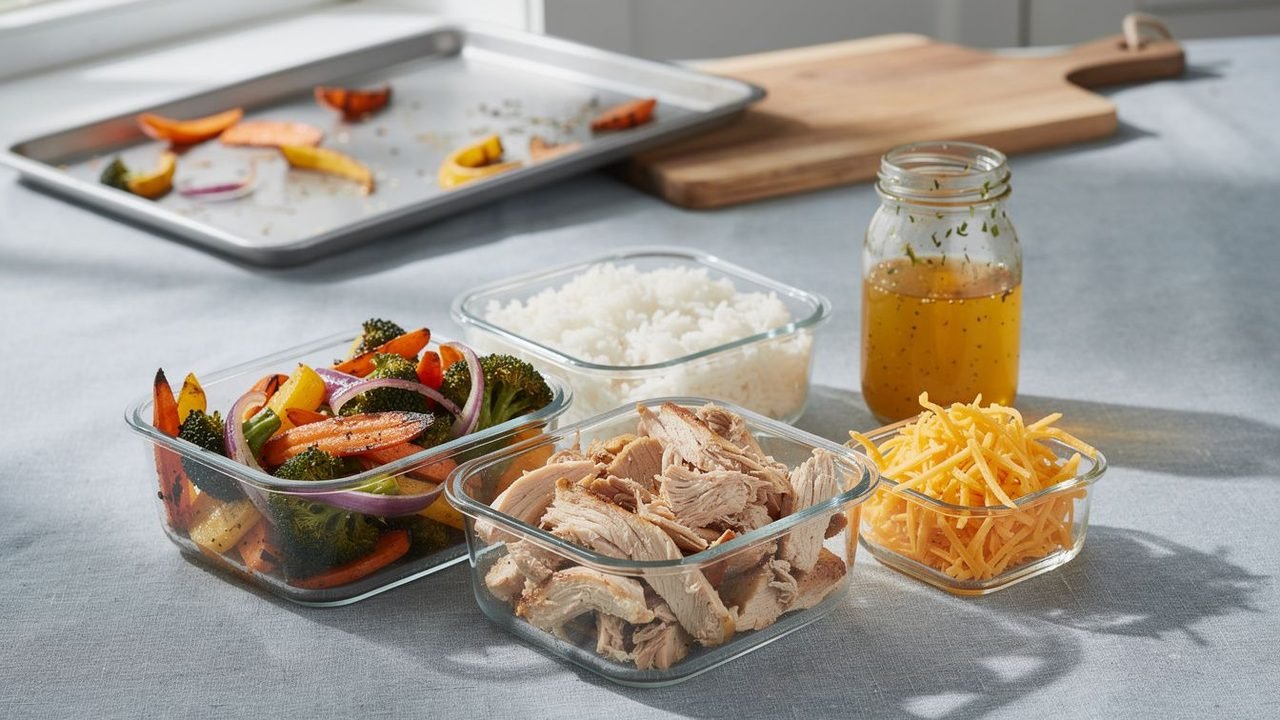
Meal prep has an image problem. Picture it and you probably see a stack of identical plastic containers filled with dry chicken, plain rice, and steamed broccoli. By Wednesday nobody wants to open another one. There is a better way. Instead of prepping finished meals, prep components you can mix and match into different dinners all week. You still get the speed, and dinner still feels like dinner.
The component approach
The idea is simple. Spend an hour or two on the weekend making building blocks: a grain, a protein or two, some roasted vegetables, a sauce, and some prepped fresh ingredients. On a weeknight, you combine them in new ways and add one quick fresh element. A tray of roasted peppers and onions can become quesadillas on Monday, a pasta bake on Wednesday, and a frittata on Friday.
Plan three to four dinners, not seven
Most households eat out, get invited somewhere, or rely on leftovers a few nights a week. Planning for three or four prepped dinners is realistic and cuts down on food waste. Pick recipes that share ingredients, so a single bunch of cilantro or block of cheddar gets fully used.
A sample Sunday game plan
Here is how we would structure a two-hour prep session. The trick is to start the longest tasks first and fill the waiting time with quick jobs.
- Heat the oven and start the grains. Heat the oven to 425 degrees F. Get a pot of rice, farro, or quinoa going on the stove.
- Roast vegetables. Toss chopped vegetables like bell peppers, onions, zucchini, broccoli, or sweet potatoes with oil and salt. Spread them on sheet pans without crowding, and roast until browned at the edges.
- Cook a protein. Roast chicken thighs on another rack, brown a pound of ground beef or turkey, or simmer a pot of beans. Choose flexible seasonings like salt, pepper, and garlic, so the protein works in different cuisines.
- Make a sauce or two. Whisk a lemony vinaigrette, blend a quick pesto, or stir together a yogurt herb sauce. Sauces do more to change the character of a meal than anything else.
- Prep fresh ingredients. Wash and dry greens, chop onions and herbs, and slice any vegetables you want raw.
- Shred your cheese. Shred a block or two of cheddar, Monterey Jack, or mozzarella and store it in a container. It melts better than bagged cheese and saves time all week.
- Cool, pack, and label. Let everything cool before refrigerating, then store in airtight containers with the contents and date.
One set of components, four different dinners
Say you prepped rice, roasted peppers and onions, chicken thighs, a lime crema, and shredded Monterey Jack. Your week might look like this:
- Monday: chicken and pepper quesadillas. Layer chicken, vegetables, and cheese in tortillas and crisp them in a skillet. Serve with lime crema.
- Tuesday: burrito bowls. Warm rice, chicken, and vegetables. Top with black beans, salsa, cheese, and crema.
- Wednesday: cheesy rice-stuffed peppers. Mix rice, chopped chicken, and half the cheese, stuff into fresh bell peppers, top with more cheese, and bake.
- Thursday: loaded sheet pan nachos. Spread chips on a sheet pan, add the remaining chicken, vegetables, and cheese, and bake until bubbly.
Same building blocks, four meals that feel genuinely different.
Make-ahead dishes that freeze well
Some dishes are practically designed for prep. Casseroles, soups, stews, chili, and filled pastas like stuffed shells can be assembled ahead and frozen. A few tips:
- Undercook pasta slightly for bakes you plan to freeze. It will finish cooking when reheated.
- Add crunchy toppings, like breadcrumbs or fried onions, right before baking rather than before freezing.
- Freeze soups in portion-size containers, leaving a little headspace for expansion.
- Label everything with the dish name, date, and reheating instructions.
Food safety basics
Prep is only helpful if the food stays safe to eat.
- Refrigerate cooked food within two hours of cooking. Spread large batches into shallow containers so they cool quickly.
- Most cooked leftovers are best eaten within 3 to 4 days. If your plan runs longer, freeze a portion right away.
- Reheat leftovers until they are steaming hot all the way through, to 165 degrees F.
- Keep your refrigerator at 40 degrees F or below.
Gear that makes prep easier
You do not need special equipment, but a few basics help a lot:
- Two rimmed sheet pans so you can roast a lot at once.
- A sharp chef's knife and a large cutting board to make chopping fast.
- Airtight glass containers in a few sizes. They reheat well, do not hold odors, and let you see what is inside.
- A box grater for shredding cheese in bulk.
Keep it flexible
The best meal prep plan is the one you will actually follow. Start small. Even prepping one grain, one tray of vegetables, and a jar of sauce will make weeknights noticeably easier. As the routine becomes habit, add more components. Before long, a satisfying, cheesy weeknight dinner will be about fifteen minutes away every night of the week.


