The Science of Silky Mac and Cheese
Grainy, greasy, or gloppy mac and cheese is a broken emulsion. Learn what keeps a cheese sauce smooth and how to rescue one that splits.
 By Marisol Vance
March 17, 2026 · 5 min read
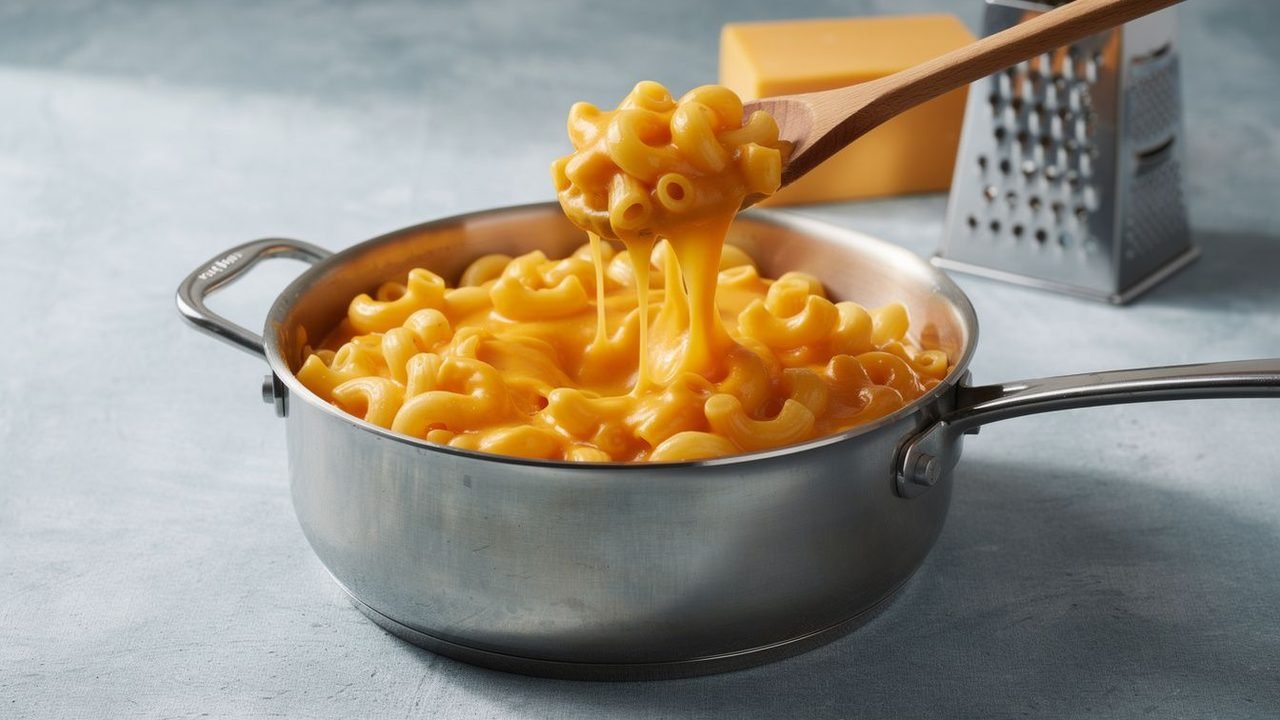
Everyone has made a disappointing mac and cheese at least once. Maybe the sauce turned grainy, maybe a slick of orange oil pooled on top, or maybe it set up like cement by the time it hit the table. The fix for all three problems lives in the same place: the emulsion. Understand that, and a silky, spoon-coating sauce becomes the rule instead of the exception.
A cheese sauce is an emulsion
An emulsion is a mixture of two things that do not naturally combine, like fat and water, held together in a stable, smooth suspension. Cheese itself is already an emulsion: fat droplets and water trapped inside a web of milk proteins called casein.
When you melt cheese into milk, you are asking that protein web to loosen up and spread fat evenly throughout the liquid. If everything goes right, you get a creamy sauce. If the proteins tighten and clump together, they squeeze out the fat. That is when you see grease on the surface and feel a gritty texture on your tongue.
Three things that break a cheese sauce
1. Too much heat
Heat is the number one culprit. When cheese gets too hot, the casein proteins contract and bind tightly to each other, forcing out fat and water. This is why a sauce that looked perfect can split if it boils after the cheese goes in. Always add cheese over low heat or off the burner entirely.
2. The wrong cheese
Very aged cheeses, like a three-year cheddar or aged Parmesan, have proteins that have already broken down into shorter pieces. They do not form a smooth network and tend to release oil. Use them for flavor, but build the base of your sauce on better melters like medium cheddar, Gruyere, fontina, or Monterey Jack.
3. Pre-shredded cheese
Bagged shredded cheese is tossed with anti-caking agents, usually starch or cellulose, so the shreds do not stick together. Those powders can leave a sauce slightly gritty and dull. Shredding a block yourself takes two minutes and makes a noticeable difference.
Two ways to stabilize the sauce
Method 1: The classic roux
Most baked mac and cheese recipes start with a bechamel: butter and flour cooked together into a roux, then whisked with milk until thickened. The starch granules from the flour swell and physically get in the way of casein proteins clumping together. That protection is why a bechamel-based sauce can survive time in the oven.
A few tips for a better roux-based sauce:
- Cook the butter and flour for a minute or two until it smells toasty, but do not let it brown for a classic sauce.
- Add the milk gradually while whisking to prevent lumps. Warm milk incorporates more easily than cold.
- Simmer the bechamel until it coats the back of a spoon, then take it off the heat before adding cheese.
- Add the cheese a handful at a time, stirring until each addition melts before adding the next.
Method 2: Emulsifying salts
Sodium citrate is the secret behind processed cheese slices and ultra-smooth nacho cheese. It works by grabbing onto calcium in the cheese, which loosens the protein network so it disperses easily in liquid without clumping. The result is a glossy, pourable sauce with no flour at all, and it lets you use sharper, more flavorful cheeses.
For stovetop mac, a small amount of sodium citrate dissolved in milk or water before adding the cheese goes a long way. A little evaporated milk works in a similar way, since it contains concentrated milk proteins and naturally occurring stabilizers that help hold an emulsion together.
The pasta matters too
Pasta releases starch as it cooks, and that starch is a bonus stabilizer. A few things to keep in mind:
- Salt the water well. Pasta cooked in bland water makes bland mac and cheese no matter how good the sauce is.
- Undercook for baked versions. Pull the pasta a couple of minutes early. It will keep absorbing sauce in the oven.
- Save some pasta water. A splash of starchy water can loosen a sauce that has thickened too much.
- Choose shapes with ridges or tubes. Elbows, cavatappi, and shells trap sauce inside and out.
Why baked mac and cheese dries out
Baked mac and cheese keeps cooking in the oven. The pasta absorbs liquid and the sauce reduces, so a sauce that looks perfectly thick on the stove will be stiff after baking. Make your sauce looser than you think it should be before it goes into the dish. It should look almost too saucy. Trust the process.
How to rescue a broken sauce
If your sauce splits, do not throw it out. Try these fixes in order:
- Pull the pan off the heat immediately.
- Whisk in a splash of cold milk or cream to bring the temperature down.
- Add a small squeeze of lemon juice or a splash of dry white wine. A touch of acid can help loosen tight proteins.
- If it is still grainy, whisk in a slurry of a teaspoon of cornstarch mixed with a tablespoon of cold milk, then warm gently while stirring.
Reheating leftovers
Leftover mac and cheese firms up in the refrigerator as the starches set. Reheat it gently in a saucepan over low heat with a splash of milk, stirring often, or cover it and warm it in a low oven. High microwave power tends to separate the fat, so use medium power and stir halfway through.
Master the emulsion and every cheese sauce gets easier, from mac and cheese to queso to a Mornay for your croque madame. It is one of the most useful bits of kitchen science you can learn.


